
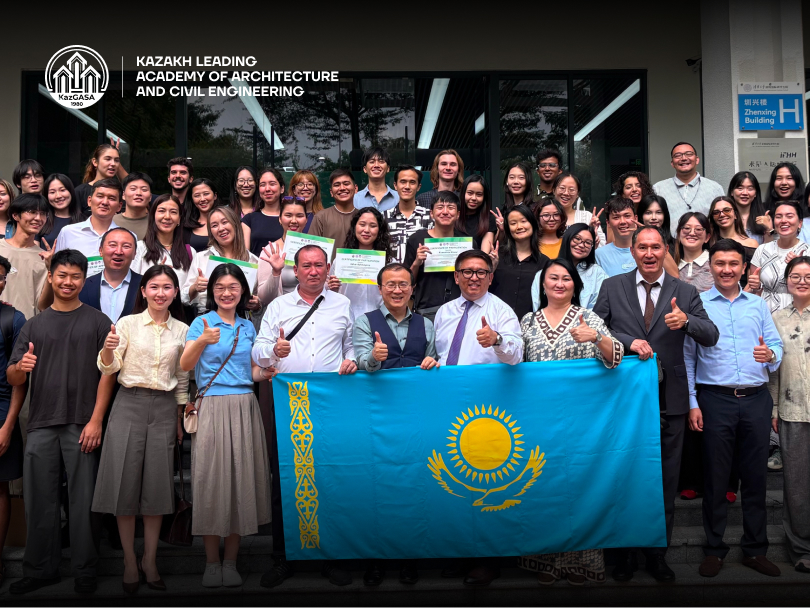
From November 1 to 7, 2026, a KazGASA delegation paid an official reciprocal visit to Tsinghua Shenzhen International Graduate School (Tsinghua SIGS), located in Shenzhen, People’s Republic of China.
The visit marked a continuation of the strategic cooperation between the two universities following the signing of a Memorandum of Understanding in Almaty on September 29, 2026. The main objectives of the visit were to strengthen academic partnerships, exchange international expertise, and explore opportunities for joint initiatives in education, research, innovation, and sustainable urban development.
The programme included working meetings, joint workshops, and project discussions with representatives of Tsinghua SIGS. One of the key areas of professional dialogue focused on the development of the Alatau City project. Participants explored contemporary approaches to urban planning, sustainable land-use planning, the creation of comfortable urban environments, and the integration of innovative solutions into the development of future urban spaces.
A significant part of the visit was dedicated to exploring China’s technology ecosystem. The KazGASA delegation visited leading technology companies DOBOT Robotics and Tencent, where they learned about the latest developments and practical solutions in robotics, artificial intelligence, and digital technologies. These visits provided an opportunity to examine how innovative technologies can be applied in education, research, and professional practice.
Particular attention was also given to environmental innovation and sustainable development. During their introduction to the Vanke Foundation project, the delegation explored approaches to implementing environmental solutions and creating sustainable urban environments. The participants also visited the Shenzhen Museum of Contemporary Art and Urban Planning, where they learned about the city’s transformation, its spatial development, and contemporary approaches to urban planning.
The significance of this cooperation lies in the opportunity to combine the academic, scientific, and innovation potential of both universities to address current challenges in architecture, urban planning, and sustainable development. Initiatives of this kind contribute to integrating international experience into the university’s educational and research activities while creating new opportunities to train specialists equipped to respond to contemporary challenges and contribute to innovative development.